Tuesday, December 11, 2012

North Korea successfully launch long range rocket


SEOUL/TOKYO, Dec 12 (Reuters) - North Korea successfully launched a rocket on Wednesday, boosting the credentials of its new leader and stepping up the threat the isolated and impoverished state poses to its opponents.
The rocket, which North Korea says was designed to put a weather satellite into orbit, has been labelled by the United States, South Korea and Japan as a test of technology that could one day deliver a nuclear warhead capable of hitting targets as far as the continental the United States.
"The satellite has entered the planned orbit," North Korea's state news agency KCNA said.
North Korea followed what it said was a similar successful launch in 2009 with a nuclear test that prompted the United Nations Security Council to stiffen sanctions against Pyongyang that it originally imposed in 2006 after the North's first nuclear test.
The state is banned from developing nuclear and missile-related technology under U.N. resolutions, although Kim Jong-un, the youthful head of state who took power a year ago, is believed to have continued the state's "military first" programmes put into place by his deceased father Kim Jong-il.
After Wednesday's launch, which saw the second stage of the rocket splash down in seas off the Philippines as planned, Japan's U.N. envoy called for a Security Council meeting. However, diplomats say further tough sanctions are unlikely to be agreed at the body as China, the North's only major ally, will opppose them.
The rocket was launched just before 10 a.m. Korea time (01000 GMT), according to defence officials in South Korea and Japan, and easily surpassed a failed April launch that flew for less than two minutes.
There was no independent confirmation it had put a satellite into orbit.
Japan's likely next prime minister, Shinzo Abe, who is leading in opinion polls ahead of an election on Dec. 16 and who made his name as a North Korea hawk, called on the United Nations to adopt a resolution "strongly criticising" Pyongyang.
There was no immediate official reaction from Washington, South Korea's major military backer, or from China.
China had expressed "deep concern" over the launch which was announced a day after a visit by a top politburo member to Pyongyang when he met Kim Jong-un.
On Wednesday, China's state news agency Xinhua said North Korea had the "right to conduct peaceful exploration of outer space."
But it added: "Pyongyang should also abide by relevant U.N. Security Council resolutions, including Resolution 1874, which demands (North Korea) not to conduct 'any launch using ballistic missile technology' and urges it to 'suspend all activities related to its ballistic missile programme.'"
U.S. Representative Ileana Ros-Lehtinen, a Florida Republican who heads the House of Representatives Foreign Affairs Committee, quickly condemned the launch and called for tougher sanctions.
"It is clear that Pyongyang is moving ever closer towards its ultimate goal of producing a nuclear ballistic missile in order to threaten not only our allies in the Asia-Pacific region but the U.S. as well," she said.
A senior adviser to South Korea's president said last week it was unlikely that there would be a meaningful set of sanctions agreed at the United Nations but that Seoul would expect its allies to tighten sanctions unilaterally

Monday, December 10, 2012

X-37B Robotic Spaceplane set for Tuesday launch


Published: 12/10/2012 07:42 AM EST on SPACE.com
The secretive U.S. Air Force X-37B robotic space plane has been cleared to lift off Tuesday (Dec. 11).
The X-37B vehicle and its cargo bay packed with a classified payload is set to make the third mission of the program. Also called Orbital Test Vehicle-3, or OTV-3, the unpiloted craft is slated to be hurled into Earth orbit by an Atlas 5 rocket from Florida's Cape Canaveral Air Force Station (CCAFS) at 1:03 p.m. EST (1803 GMT).
There's an interesting angle to the upcoming mission. This third flight will use the same X-37B spacecraft that flew the first test flight, the OTV-1 mission, back in 2010.
That maiden voyage of the miniature space plane lasted a little over 224 days, orbiting Earth from April 22, 2010 to Dec. 3 of that year, and finally landing on autopilot at a specially prepared runway at Vandenberg Air Force Base in California. [Photos: U.S. Military's X-37B Space Plane]
A different X-37B vehicle made a similar Vandenberg touchdown this past June 16, after staying in orbit 469 days on its OTV-2 mission.
The X-37B program is being run by the U.S. Air Force Rapid Capabilities Office. The two space planes in the fleet — which are 29 feet (8.8 meters) long and 15 feet (4.5 m) wide, with a payload bay about the size of a pickup truck bed — were built by Boeing Government Space Systems.
The Air Force's Rapid Capabilities Office has a mission of expediting the development and fielding of select Department of Defense combat support and weapon systems by leveraging defense-wide technology development efforts and existing operational capabilities.
According to an Air Force factsheet, the Rapid Capabilities Office is working on the X-37B Orbital Test Vehicle "to demonstrate a reliable, reusable, unmanned space test platform for the United States Air Force."
While both previous X-37B missions touched down at Vandenberg, the Air Force has been reviewing the prospect of landing future flights at NASA's Kennedy Space Center in Florida, next door to the Cape Canaveral launch site. Returning the robotic space plane to the KSC landing strip — which was used by NASA's now-retired space shuttle fleet — would lower costs, because the vehicle wouldn't have to be transported back from California to Florida after each mission.

READ THE REST OF THE STORY HERE


Saturday, December 8, 2012

Pearl Harbor F-22 tail scrape costs 1.8 million


An F-22 fighter jet used in a flyover during a remembrance ceremony at Pearl Harbor scraped its tail on a runway as it landed, causing $1.8 million in damage.

A Hawaii National Guard spokesman says nobody was hurt in the incident Friday morning on the 71st anniversary of the Japanese attack on Pearl Harbor.

Lt. Col. Charles Anthony says the jet was coming back to Joint Base Pearl Harbor-Hickam from a training exercise after taking part in the ceremony. He says the "mishap" happened roughly 90 minutes after the flyover.

In jet terms, the damage to the F-22's horizontal stabilizers may be little more than a pricey fender-bender.

Anthony says it costs roughly $147 million to make one F-22 fighter. nThe Raptor belonged to the 199th and 19th Fighters Squadrons. It sustained damage to both horizontal stabilizers.

The initial cost estimate for repairs is $1.8 million. Each Raptor costs more than $400 million.  The tail of the plane scraped the runway during landing, according to a Hawaii National Guard spokesman.

The pilot of the aircraft was uninjured. The cause of the damage is under investigation.

Thursday, December 6, 2012

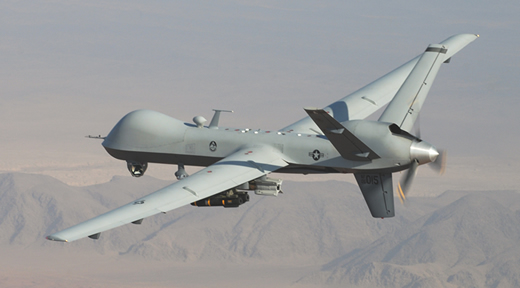
Duh - yeah- they are unmanned!

NELLIS AIR FORCE BASE (KSNV MyNews3) – A U.S. Air Force MQ-9 Reaper crashed on the Nevada Test and Training Range on Wednesday night, according to a news release.

No one was injured in the incident, which occurred around 7:15 p.m. in a remote location west of Hiko.
The remotely piloted aircraft, assigned to the 57th Wing here, was participating in a combat training mission as part of the U.S. Air Force Weapons School Mission Employment phase. 

A board of officers is being convened to investigate.

US Navy poised for North Korean missile launch


The Navy is moving some warships into position to monitor a possible upcoming North Korean launch of a long-range ballistic missile, U.S. Department of Defense officials said Thursday.
The USS Benfold and the USS Fitzgerald - both guided missile destroyers - are moving into positions, although the Navy declined to give their exact location. They are being sent to monitor for a possible launch and "provide reassurance to allies," according two Defense Department officials.
It's possible two additional ships will be sent in the next few days, the officials added.
North Korea appears to be working toward its goal of launching a rocket later this month, with a recent satellite image showing preparations continuing around the site.

The December 4 image provided to CNN by satellite imagery company GeoEye shows increased activity by workers on the launch pad, an imagery analyst told CNN.com's Security Clearance. The launch pad activity was not evident in an image from DigitalGlobe taken three days earlier.
The U.S. is also, “rapidly moving assets to pacific region because of the ballistic missile threat in the region,” the Commander of U.S. Pacific Command, Adm. Samuel J. Locklear III told reporters at a Pentagon briefing Thursday morning in reference to the North Korean threat.
"I don't believe that a launch is imminently imminent, but what we are seeing is sort of what they call the beginning of the end of launch preparations," Allison Puccioni, an analyst with Jane's IHS who writes about North Korean imagery for Jane's Defense Weekly, said last week. "Prior to this, we had not seen much in the way of rocket launch pad activity, but now we are seeing some significant stuff happening," such as additional work on the rocket launch tower, she said.
North Korea says it intends to launch a rocket it claims is for science and research purposes sometime between December 10 and December 22. The United States has condemned the test because the launch employs the same technology that would be used in a test of ballistic missiles. The launch would also be a violation of two separate resolutions passed by the United Nations Security Council.

LinkWithin

Blog Widget by LinkWithin