Wednesday, December 20, 2023

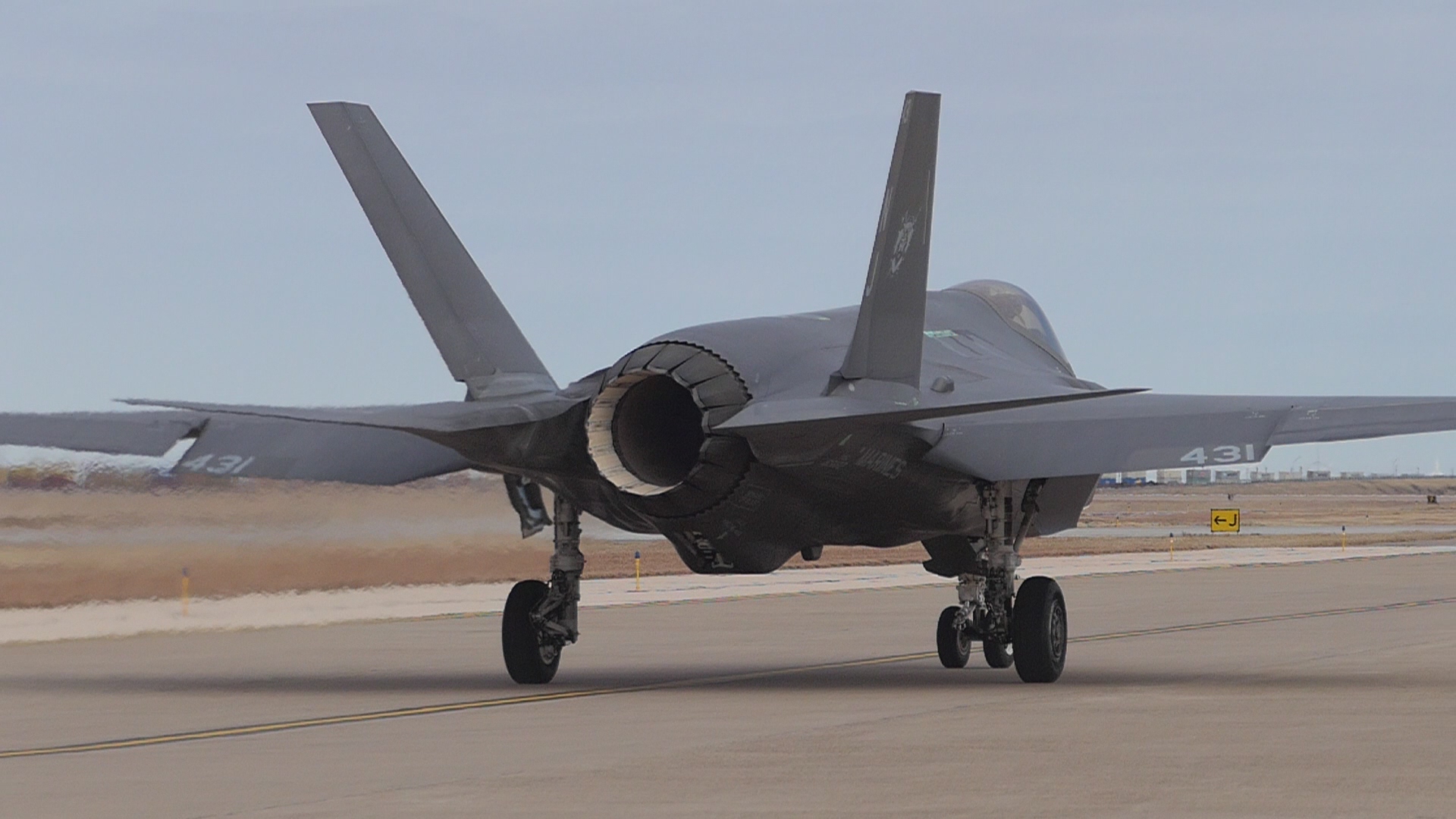
F-35 loses "stealth panel" over the Pacific

Interesting news, an F-35 losing a very expensive stealth panel over the Pacific. I couldn't help but notice the pilots of the F-35Cs (that landed at our local airport in November) were futzing with the panels. My video:

VIDEO (C) STEVE DOUGLASS 


On the morning of December 18, an F-35A Lightning II belonging to the US Air Force’s 356th Fighter Squadron touched down at the Japanese Kadena Air Base. In an unusual incident, it was discovered that a vital component of the stealth aircraft was missing when it landed.

After the incident came to light, a spokesperson of the Air Force said that the advanced stealth fighter that returned to its Okinawa base without a panel might have lost the part over the Pacific Ocean.

The spokesperson for the 18th Wing, which is the USAF’s hosting Wing at the Kadena air base, 1st Lt. Robert Dabbs, stated that the aircraft was missing a hexagonal side panel that measured 18 by 12 inches and weighed roughly two pounds. The panel is generally located on the aircraft’s right side, beneath the cockpit.

“Expectations are the panel departed the aircraft over water,” Dabbs was quoted saying. “We have not received reports of damage or injuries.”

The missing panel covers the external ports for electronic devices. Without the piece, the aircraft may no longer be able to disguise itself, thus eroding the aircraft’s stealth capabilities and making it an easy target for the enemy and its air defense systems.

Monday, December 11, 2023

Section 702 Bill battle brewing


TWO SURVEILLANCE BILLS are barreling their way through the US House of Representatives this week. Both claim to achieve roughly the same goal: Enact sweeping reforms and save a dying surveillance program beleaguered by “persistent and widespread” abuse.

Under this program, Section 702, the US government collects hundreds of millions of phone calls, emails, and text messages each year. An inestimable chunk belongs to American citizens, permanent residents, and others in the United States neither suspected nor accused of any crime.

While both bills would extend the program’s life, only one of them can credibly lay claim to the title of reform. Legislation introduced last week by Representative Andy Biggs in the House Judiciary Committee would require the Federal Bureau of Investigation (FBI) to obtain warrants before accessing the communications of Americans collected under Section 702. The second bill, introduced by the House Intelligence Committee, contains no equivalent protection.


The House Judiciary Committee’s Protect Liberty and End Warrantless Surveillance Act (PLEWSA, unfortunately) secures a glaring loophole in US law that helps police and intelligence agencies buy their way around the Fourth Amendment by paying US companies for information that they’d otherwise demand a warrant to disclose. The House Intelligence Committee’s bill—the FISA Reform and Reauthorization Act, or FRRA—does nothing to address this privacy threat.

What the FRRA does appear to do, despite its name, is explode the number of companies the US government may compel to cooperate with wiretaps under Section 702. That was the assessment on Friday of Marc Zwillinger, amicus curiae to the Foreign Intelligence Surveillance Court of Review (FISCR). “These changes would vastly widen the scope of businesses, entities, and their affiliates who are eligible to be compelled to assist 702 surveillance,” Zwillinger wrote in an article with Steve Lane, a former Justice Department (DOJ) attorney.


Plus, it's been blatantly abused by the FBI to spy on American protesters and an unnamed US senator, among other elected officials.

Section 702 will expire at the end of the year unless it's renewed by US lawmakers.

A day after the Judiciary Committee advanced its proposal, on Thursday the House Intelligence Committee unanimously passed the FISA Reform and Reauthorization Act of 2023 (HR 6611).

This proposal also renews Section 702 — but notably without a strict warrant requirement, similar to another bill to reauthorize Section 702 in the US Senate.

Instead, it seeks to end the FBI's abuse of the controversial snooping tool by limiting its powers to conduct Section 702 queries on people in the US. Specifically, it prohibits the FBI from conducting "evidence of a crime only" queries of information, and greatly reduces the number of agents authorized to approve legal queries.

It also requires the FBI to notify "appropriate congressional leadership" anytime it conducts some of these queries, including those that involve US elected officials and political candidates.

US Representative Mike Turner (R-OH), who chairs the House Intel Committee, blasted the rival Judiciary Committee bill in his opening remarks.

"Our bill is targeted to FBI abuses and I would have thought their bill would have also," Turner said. "However, their bill spends more time expanding the constitutional rights of foreigners who travel in and out of the US, it creates civil liability for telecommunications companies that work with our intelligence community voluntarily, and curiously it provides immunity from prosecution, for some horrific crimes if they are discovered under 702 foreign intelligence collection."

These crimes, according to Turner, include "child pornography, human trafficking, murder and even money laundering."

Both bills are expected to be voted on by the full House of Representatives as early as next week.
Guess which bill privacy advocates like best?

While we'd assume that the FBI prefers the House Intelligence Committee's plan to reform Section 702 of the two options approaching a House floor vote, civil liberties, and digital privacy advocates aren't fans.

Greg Nojeim, director of the Center for Democracy and Technology's (CDT) Security and Surveillance Project, called HR 6611 a "Trojan Horse" and warned it would actually expand surveillance powers.

"This Trojan Horse would take FISA 702 orders beyond the realm of communication services (like email and messaging providers) and pull in anyone who could access equipment on which communications might be sent or stored," Nojeim said on Friday.

"This could include data centers that merely rent out computer space, hotels and Airbnb owners, and even the local library or coffee shop. Including this provision would seriously impact American businesses far outside the communications and tech sector."


Two days before, CDT applauded the House Judiciary Committee vote to advance HR 6570.

The ACLU also supports the Judiciary Committee's proposal.

"With so much of our lives taking place online, it's more important than ever that we have the freedom to communicate without fear of government surveillance," said Kia Hamadanchy, senior policy counsel at ACLU, in a statement.

"This bipartisan bill is Congress's best chance to ensure that Americans' Fourth Amendment rights against unlawful search and seizures are actually protected and to finally hold the government accountable for its constant abuse of Section 702," Hamadanchy continued.

And for those keeping a running tally: There's also the much broader Government Surveillance Reform Act that seeks to reform Section 702 introduced in both the House and the Senate last month, although that proposal — which also includes a warrant requirement for US persons queries — is still awaiting committee votes in both chambers. ®

Thursday, November 9, 2023

PHOTOS: NAVY F-35 DROPS INTO AMARILLO

A Navy F-35C Stealth Fighter unexpectedly landed this afternoon at Amarillo International /Rick Husband Airport. According to sources at the airport, the fifth-generation fighter was flying cross country and stopped at Signature Air Flight Service to refuel. 

This is the first and only time that an F-35 has landed in Amarillo. The F-35 is attached to the VFA-125 squadron "Flight Replacement Squadron" out of Naval Air Station, Lemoore California. 

The F-35C is the first and world’s only long-range stealth strike fighter designed and built explicitly for Navy carrier operations. 


ALL PHOTOS & VIDEO (C) STEVE DOUGLASS 


Thursday, October 26, 2023

DHS and FBI raise concerns of terror attacks in light of Israel/HAMAS war

DHS and FBI Public Service Announcement Threat Environment The Department of Homeland Security (DHS) and Federal Bureau of Investigation (FBI) are issuing this Public Service Announcement to highlight potential threats in the United States from a variety of actors in response to the HAMAS attacks on Israel on 7 October and subsequent activities in the region, including additional calls by foreign terrorist organizations to their supporters seeking to foment violence in the West. This is an update to the 10 October FBI and DHS Public Service Announcement and the 18 October FBI, National Counterterrorism Center (NCTC), and DHS Joint Intelligence Bulletin to law enforcement partners. 

This announcement reflects a fluid and evolving situation; the terrorism threat in the Homeland has remained heightened throughout 2023, but recent events have increased the possibility of potential attacks against individuals and institutions in response to developments in the Middle East. Since DHS and FBI issued the 10 October Public Service Announcement, the volume and frequency of threats to Americans, especially those in the Jewish, Arab American, and Muslim communities in the United States, have increased, raising our concern that violent extremists and lone offenders motivated by or reacting to ongoing events could target these communities. 

These threats have included hoax bomb threats targeting houses of worship and violent rhetoric online encouraging attacks against the Jewish, Arab American, and Muslim communities across the United States. Of note, on 14 October an individual in Illinois stabbed and killed a six-year-old Palestinian-American child and severely wounded his mother, an incident that is being investigated as an anti-Muslim hate crime. 

While we have no specific information that foreign adversaries are plotting attacks against the homeland, some are seeking to take advantage of the conflict, calling for violence in furtherance of their respective goals. On 13 October, al-Qaida media called for support to HAMAS through attacks against American bases, airports, battleships, and embassies in predominantly Muslim countries. On 19 October, an ISIS media posting urged followers to “target the Jewish presence all over the world…especially Jewish neighborhoods in America and Europe,” and specifically encouraged attacks on Jewish temples, nightclubs, and economic interests and against “Jewish and Crusader” embassies. Iranian media outlets have issued and/or amplified various types of mis- and dis-information online about the conflict in ways that risk deepening resentment and evoking strong emotional responses among English-speaking audiences. These outlets are utilizing verifiably doctored or mislabeled images and video footage, inaccurate translations, and misleading content about the conflict with the apparent intent to stoke passions, accelerate the process of radicalization, and lead individuals to engage in targeted violence. 

Tensions between Israel and the Palestinian territories have long been a source of calls for violence against Jewish, Arab American, and Muslim communities. This history, coupled with the current widespread sharing of graphic and disturbing content related to this conflict, increases the risk of incitement to violence in the United States. We therefore urge everyone to remain vigilant and to report any threats of violence or suspicious activity to law enforcement. 25 October, 2023 2 Resources DHS and FBI are particularly attuned in this environment to the concerns of the Jewish, Arab American, and Muslim communities and will continue to engage directly with leaders in these communities to ensure that available resources are brought to bear. • To help mitigate potential risks in today’s dynamic and rapidly evolving threat environment, DHS has compiled several resources for communities and faith leaders, including the Cybersecurity and Infrastructure Security Agency (CISA) compendium of resources for securing mass gatherings and public spaces. 

Additionally, resources for law enforcement also are available to increase our nation’s ability to prevent acts of violence and increase our resilience to evolving threats. • To report any leads, threats, or suspected criminal activity, FBI and DHS urge the public to visit www.tips.fbi.gov or contact their local FBI Office: www.fbi.gov/contact-us/fieldoffices. For emergencies or an immediate threat to life, please call 911. • For tips on identifying concerning behavior which may be connected to violent extremism, the FBI, DHS, and the National Counterterrorism Center published an updated U.S. Violent Extremist Mobilization Indicators booklet in 2021. • If You See Something, Say Something® - Report suspicious activity and threats of violence, including online threats, to local law enforcement, FBI Field Offices, or your local Fusion Center. Call 911 in case of emergency.

LinkWithin

Blog Widget by LinkWithin