Monday, August 19, 2019

And the sky fell ... what the Russian explosion tells us

CNN:

An explosion. An abruptly-canceled village evacuation. Five dead nuclear experts. And a few traces of radioactive iodine in the air over the northern Norwegian coastline.

These are the fingerprints of what appears to have been Russia's latest failed bid to test its Burevestnik missile, also known as Skyfall.

It's claimed by its owner, Russian President Vladimir Putin, to have unlimited range and be able to outflank all US air defenses. But this month, it proved, for a Kremlin keen to emphasize its growing military muscle, yet another high-profile hiccup.

It wouldn't be the first time that a test of the missile wasn't entirely successful, according to US officials.

But what is Skyfall? In truth, analysts don't really know, but their guesswork leads them to believe it's a form of cruise missile designed around a nuclear reactor.

The spiking of radiation levels in the area, potentially reaching as far away as Norway, lends credibility to the theories.

Putin's spokesman, Dmitry Peskov, declined to confirm widespread international speculation that the accident involved a nuclear-powered cruise missile, but said the mishap would not set back Russian efforts to develop advanced military capabilities.

Peskov said that only experts could speak with authority on such matters, but added: "Accidents, unfortunately, happen. They are tragedies. But in this particular case, it is important for us to remember those heroes who lost their lives in this accident."

Jon Hawkes, associate director of land warfare at Jane's IHS Markit, said the system could work one of two ways. It could be an "air-breathing engine employing a small nuclear reactor core to heat incoming air that is expelled to generate thrust."

Or it could be a "nuclear thermal rocket engine, where the nuclear core is used to heat a liquid fuel such as hydrogen before expelling it through a nozzle to produce thrust."

Yet he added, "given the Russians are claiming unlimited range, then one would assume it has to be along the lines of the first option, as the hydrogen fuel device would have a limit to its range."

The major problem with the 9M370, or SSC-X-9 Skyfall (as NATO calls it), is the exhaust. You can't use a nuclear reactor to power a rocket without likely creating a form of dirty bomb on wings.

"This is a doomsday weapon really," said Dr Mark Galeotti, from Royal United Services Institute for Defence and Security Studies.

"It's not something that could be deployed in anything other than a full-scale nuclear war. It is a cruise missile that can stay in the air for a long time, but it is belching out radioactive plumes behind it."

The US indeed had a similar program in the 1960s, called Project Pluto, which was abandoned as they concluded it was too dangerous at the time.

When Putin launched the missile with great fanfare in March 2018 he extolled its unlimited range -- that it could circle the globe many times and then fire itself at its target from an unexpected angle, perhaps even days after launch.

Is Putin bothered that it doesn't appear so far to have worked that well? Not really, said Galeotti.

"Vladimir Putin's Russia is basically trying to puff itself up," he said. "It is trying to look more militarily formidable than it is. Although they don't like the fact that this failed, the fact that we are talking about the latest Russian military technology is definitely something of a plus."

US officials told CNN it's been tested a few times, but never fully successfully. How far along the project is, and how big a setback this, is is anyone's guess.

But the Kremlin has had a number of incidents to brush off in the past month.

In early July, the AS-31, or Losharik, super-deep, super-secret spy submarine, ran into trouble off the northern coast. State media said 14 sailors on board died of smoke inhalation, and the Kremlin insisted its nuclear reactor was intact when it was returned to port.

The Losharik -- named after a Soviet-era cartoon horse because of the compartmentalized components that enable it to dive to the bottom of the ocean floor -- was meant to plunge to depths that nuclear and attack submarines could not.

Again, Putin found himself being briefed on a clean-up operation.

Weeks later, a munitions dump in Achinsk suffered a series of explosions over five hours, some causing devastating shockwaves and debris to be scattered over the area. A week later, local officials admitted forty people were injured.

These three incidents amount to a bad summer for the Russian military, who after the invasion of Ukraine, and their intervention into Syria, had benefited from a short-term lift in their domestic prestige.

Could over-reach be behind this recent spate of problems?

Andrey Kortunov, Director General of the Russian International Affairs Council, said, "if you look at the current defense budget of the Russian Federation, it reached its peak in 2016."

He added it had decreased since.

"So basically, the military and the defense sector are asked to do more for less," he added, "and that might be a stretch. Maybe some of these accidents are a part of the price that the military has to pay from this relatively modest budget but the [substantial] ambitions behind this budget."

A turbulent month of unexpected blasts and leaks that begs the question as to whether the Kremlin's race to the bottom of the sea, or top of the heavens, will scorch too much in its wake.

Wednesday, August 14, 2019

Moscow orders evacuation of Nvonoksa - then cancel it.


MOSCOW (AP) — The Russian military on Tuesday told residents of a village near a navy testing range to evacuate, but cancelled the order hours later, adding to the uncertainty and confusion fueled by a missile explosion last week that led to a brief spike in radiation that frightened residents and raised new questions about the military’s weapons program.

Initially the military told residents of Nyonoksa, a village of about 500, to move out temporarily, citing unspecified activities at the range. But a few hours later, it said the planned activities were cancelled and rescinded the request to leave, said Ksenia Yudina, a spokeswoman for the Severodvinsk regional administration.

Local media in Severodvinsk said Nyonoksa residents regularly receive similar temporary evacuation orders usually timed to tests at the range.

The Defense Ministry initially said Thursday’s explosion of a rocket engine at the navy range killed two people and injured six others, but the state-controlled Rosatom nuclear corporation said two days later that the blast also killed five of its nuclear engineers and injured three others. It’s still not clear what the final toll is.

And just as the Severodvinsk administration reported a brief spike in radiation levels, the Defense Ministry insisted that no radiation had been released — a blunt denial reminiscent of Soviet-era attempts to cover up disasters that added to public nervousness.


1 of 4
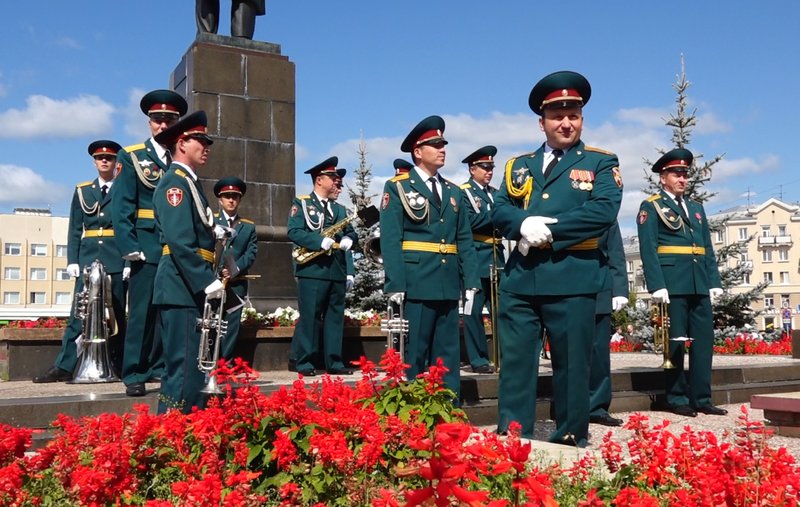
In this grab taken from a footage provided by the Russian State Atomic Energy Corporation ROSATOM press service, a Russian military band prepare to attend the funerals of five Russian nuclear engineers killed by a rocket explosion in Sarov, the closed city, located 370 kilometers (230 miles) east of Moscow, which has served as a base for Russia's nuclear weapons program since the late 1940s, Russia, Monday, Aug. 12, 2019. Russia's Rosatom state nuclear concern said Thursday's explosion at a military testing range in northwestern Russia occurred while the engineers were testing a "nuclear isotope power source" for a rocket engine, a tragedy that fueled radiation fears and raised new questions about a secretive weapons program. (Russian State Atomic Energy Corporation ROSATOM via AP)
.


“It’s shocking when people who live there, let alone us, have no idea what really happened,” Svetlana Alexievich, a Nobel Prize-winning author who wrote a book containing first-hand accounts of the 1986 Chernobyl nuclear disaster, said on Ekho Moskvy radio. “It looks like we haven’t learned the lessons of Chernobyl and Fukushima.”

When reactor No. 4 at the Chernobyl nuclear power plant in Soviet Ukraine exploded and burned on April 26, 1986, Soviet leaders initially tried to hide the disaster from the public and it took them days to acknowledge the full scale of the world’s worst nuclear accident.

After Thursday’s missile explosion, the Severodvinsk city administration said the radiation level rose to 2 microsieverts per hour for about 30 minutes before returning to the area’s natural level of 0.1 microsieverts per hour. Emergency officials issued a warning to all workers to stay indoors and close the windows. Spooked residents rushed to buy iodide, which can help limit the damage from exposure to radiation.

Yudina said that radiation levels in Severodvinsk, a city of 183,000 about 30 kilometers (20 miles) east of Nyonoksa, have been normal since Thursday.

Tuesday, August 13, 2019

Storm Area 51 turns into Aleinstock - but Nevada locals are not happy.


SKY NEWS;

The nearest town to Area 51 has warned people to stay away from a music festival being organised by the man behind a call to arms that saw more than two million people sign up to storm the military base.

So many committed to the proposed raid of the complex in Nevada in the hope of seeing aliens that the US air force felt compelled to warn it "stands ready to protect America and its assets", and the Facebook event was eventually shut down after its organizer admitted it was a joke.

Storm Area 51 creator Matty Roberts has teamed up with event producer The Hidden Sound to put on the festival, where people can safely display their "unified curiosity" in the existence of extra-terrestrial life.

The organizers are promising to deliver an "amazing experience" with "headlining artists" - but those claims have been questioned by local authorities.

In a warning to those planning to make the trip for the planned event, the official website for Rachel says the three-day gig will "undoubtedly attract crooks trying to capitalize on the chaos".

It advises people to "stay away" from residential areas of the town, which has become a tourist attraction because of how close it is to Area 51, as most locals "do not like where this event is going and will respond accordingly".

The statement continues: "The residents were not asked and are not on board and will certainly not allow their town to be taken over. This has a high potential of getting ugly. Please consider visiting at another time."

Sceptics of Alienstock - which is accepting donations - have already compared it to the ill-fated Fyre Festival, which was pitched as a luxury music event in the Bahamas but quickly turned to chaos.

Tickets went for up to $75,000 (£58,000) and there were a vast array of problems, from guests sleeping in hurricane disaster tents to bland cheese sandwiches replacing the advertised gourmet food.

Tuesday, July 30, 2019

Israel said to be making strikes Iranian sites in Iraq


TIMES OF ISRAEL :

Israel has expanded its operations against Iranian targets to Iraq, where Air Force jets have struck twice in ten days, a report said Tuesday morning.

Israel commonly conducts strikes in Syrian territory, targeting Iranian missile shipments meant for Lebanese terror group Hezbollah to use against the Jewish state, but strikes in Iraq by Israel have not been reported since the 1981 bombing of a nuclear reactor.

Asharq Al-Awsat, an Arabic-language newspaper published in London, cited Western diplomatic sources as saying an Israeli F-35 plane was behind a July 19 strike on a rocket depot in a Shiite militia base north of Baghdad.

The Saudi-based al-Arabiya network reported at the time that members of Iran’s Revolutionary Guards Corps and Hezbollah had been killed in the strike. It said the base had shortly before the strike received Iranian ballistic missiles, which had been hidden inside trucks.

Iraq’s military said at the time that one fighter was killed and two Iranians wounded, saying the strike was carried out by an unmanned drone. The United States denied involvement.

That strike targeted Iranian advisers and a ballistic missile shipment, the report cited sources as saying.

The report also mentioned a strike in Syria last week blamed on Israel, in which nine were killed including six Iranians fighting for the Syrian regime, claiming it was meant to prevent Iran from taking over a strategic hill in the Daraa province in the country’s south.

Israeli missiles targeted “military positions and intelligence facilities belonging to Iran and [pro-Iranian] militias” in the southern provinces of Daraa and Quneitra early on Wednesday, the Syrian Observatory for Human Rights said at the time.

The other three killed in the strike were pro-regime Syrian fighters, it added.


Israel has carried out hundreds of airstrikes in Syria since the beginning of the conflict in 2011, targeting Iranian and Hezbollah forces in the country, as well as those loyal to the Assad regime, as part of a stated policy to prevent arms transfers to Hezbollah in Lebanon and the entrenchment of Iranian military forces across from Israel’s northern border.

Israel does not usually comment on specific reports of strikes, but does insist it has the right to defend itself by targeting positions held by Iran and Hezbollah.

Regional Cooperation Minister Tzachi Hanegbi boasted last week that Israel is the only country in the world that has been “killing Iranians.”

In a speech to the UN General Assembly last September, Prime Minister Benjamin Netanyahu warned that “Israel will do whatever it must do to defend itself against Iran’s aggression. We will continue to act against you in Syria. We will act against you in Lebanon. We will act against you in Iraq. We will act against you whenever and wherever we must act to defend our state and defend our people.” An excerpt from that speech was utilized in a recent Likud election campaign clip.

Thursday, July 25, 2019

Marines arrested for human smuggling


WASHINGTON, July 25 

Sixteen U.S. Marines were arrested on Thursday for their alleged involvement in illegal activities including human smuggling and drug-related offenses, the U.S. military said.

In a press release, the Marine Corps said that the Marines were arrested at Camp Pendleton in California based on information gained from a previous human smuggling investigation.

The statement added that in addition to the Marines arrested, eight others were questioned for unrelated alleged drug offenses.

The Marine Corps said none of those arrested or detained were serving in support of the military's mission along the border with Mexico.

The arrests took place in a dramatic fashion on Thursday morning at Camp Pendleton, California, during a battalion formation.

"Information gained from a previous human smuggling investigation precipitated the arrests," the statement said. Eight other Marines were also questioned on their involvement in alleged drug offenses unrelated to today's arrests, the Marine Corps said.

Byron Law II and David Salazar-Quintero, both lance corporals, were arrested after their vehicle was pulled over by Border Patrol agents about 20 miles east of the Tecate port of entry.
Law was driving, and Salazar-Quintero was in the passenger seat. There were three passengers in the back of the car, and they told the agent they were Mexican citizens, had no immigration papers and were not permitted to enter the United States, according to the complaint.

The three immigrants apprehended from the back of Law's car told Border Patrol agents that they'd made arrangements to be smuggled into the United States and had been told via cellphone to get into Law's car.

Two of the migrants said they were planning to pay $8,000 to be smuggled into the country, the complaint says. One planned on traveling to Los Angeles, the other to New Jersey.
The driver and passenger, under questioning, began pointing fingers at one another, the complaint says, detailing their involvement in a smuggling operation.

According to their service records supplied by the US Marine Corps, both of the men charged earlier in the month are riflemen with the 1st Battalion, 5th Marine Regiment, 1st Marine Division. They have been awarded the National Defense and Global War on Terrorism service medals.

Capt. Christopher Harrison, Marine Corps spokesman, previously told CNN that the corps is "aware of the charges facing Lance Cpl. Law and Lance Cpl. Salazar-Quintero."
"We continue to cooperate fully with the investigative efforts into this matter," he said earlier this month.

LinkWithin

Blog Widget by LinkWithin